

Rethinking Turner Through Slavery and the Archive
Art historian Sam Smiles revisits J. M. W. Turner and the meanings attached to The Slave Ship. The book asks how paintings, archives, and colonial histories shape what we think we see.
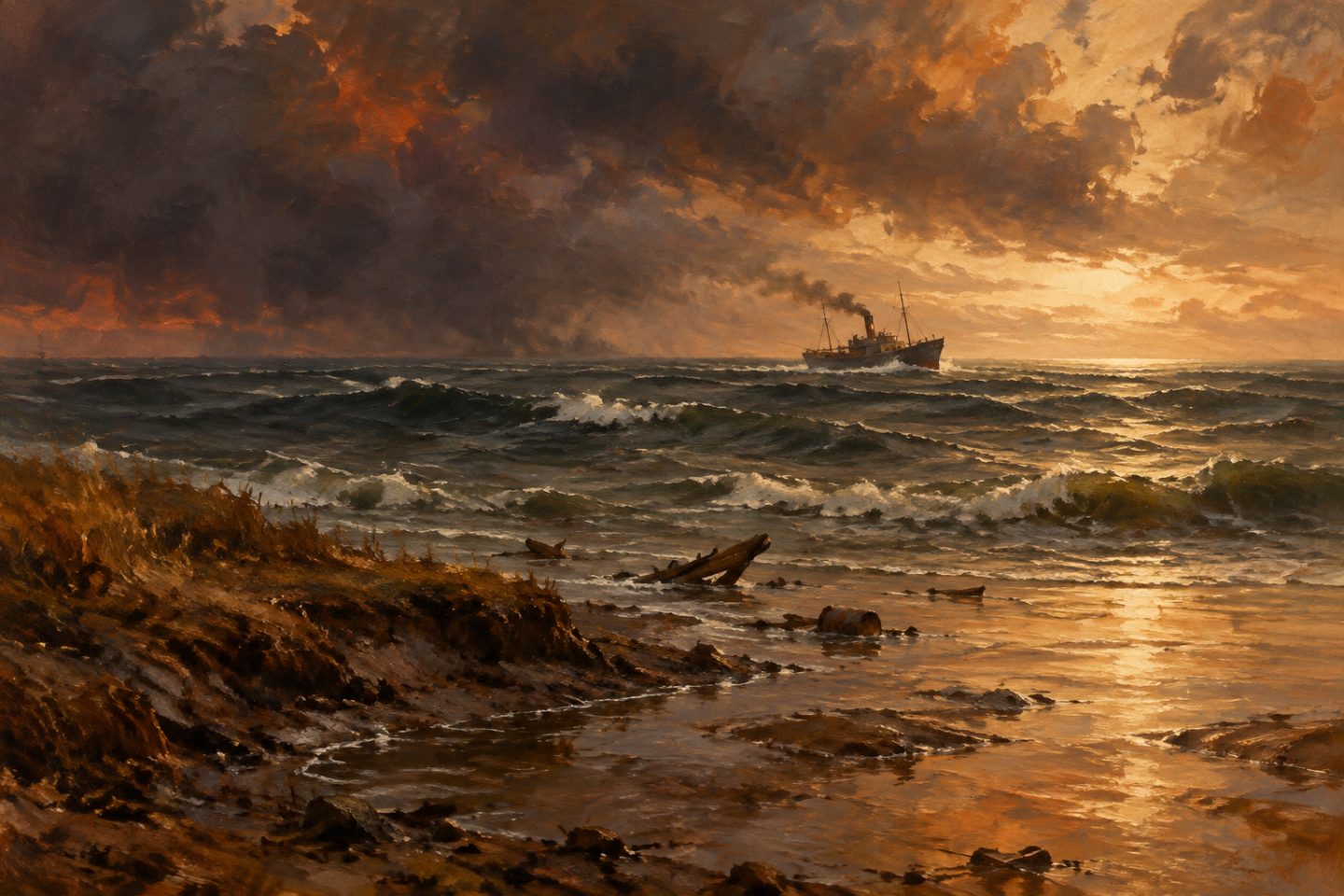
In Turner and the Slave Trade, published in 2026, Smiles returns to The Slave Ship (1840), a painting long linked to the Zong massacre. He argues that the work is probably not a direct reference to that event, while still reading it as part of Turner’s changing ethical outlook.
The review also notes that the painting was first shown at the Royal Academy in 1840 under its original title, Slavers Throwing overboard the Dead and the Dying–Typhoon Coming On. What stands out in the image is the way the human body is placed within the composition: a shackled leg in the lower right corner, beside fish and seabirds, turns atrocity into a problem of pictorial attention as much as of historical reference.
Smiles also brings forward a less familiar part of Turner’s biography: a 1805 investment in a consortium tied to a Jamaican cattle farm worked by enslaved Africans. That detail shifts the discussion from a single celebrated canvas to the wider economic world that underwrote British art and empire, a context that matters to anyone thinking about how images are made, financed, and remembered.
For painters, draughtsmen, and museum-goers alike, the book’s value lies in its method. Smiles avoids sensationalism and handles the colonial archive with care, showing how art history can address racial violence without repeating its language. The result is a more demanding way of looking at Turner: through composition, ethics, and the afterlife of images.
Source : Hyperallergic