

How Alfred Wallis shaped a generation of British artists
Pallant House Gallery in Chichester is mounting an exhibition around Alfred Wallis, the self-taught Cornish painter who came to art late and from outside the usual routes. By placing his work beside artists linked to St Ives, the show looks at how his way of seeing fed into British painting in the 20th century.
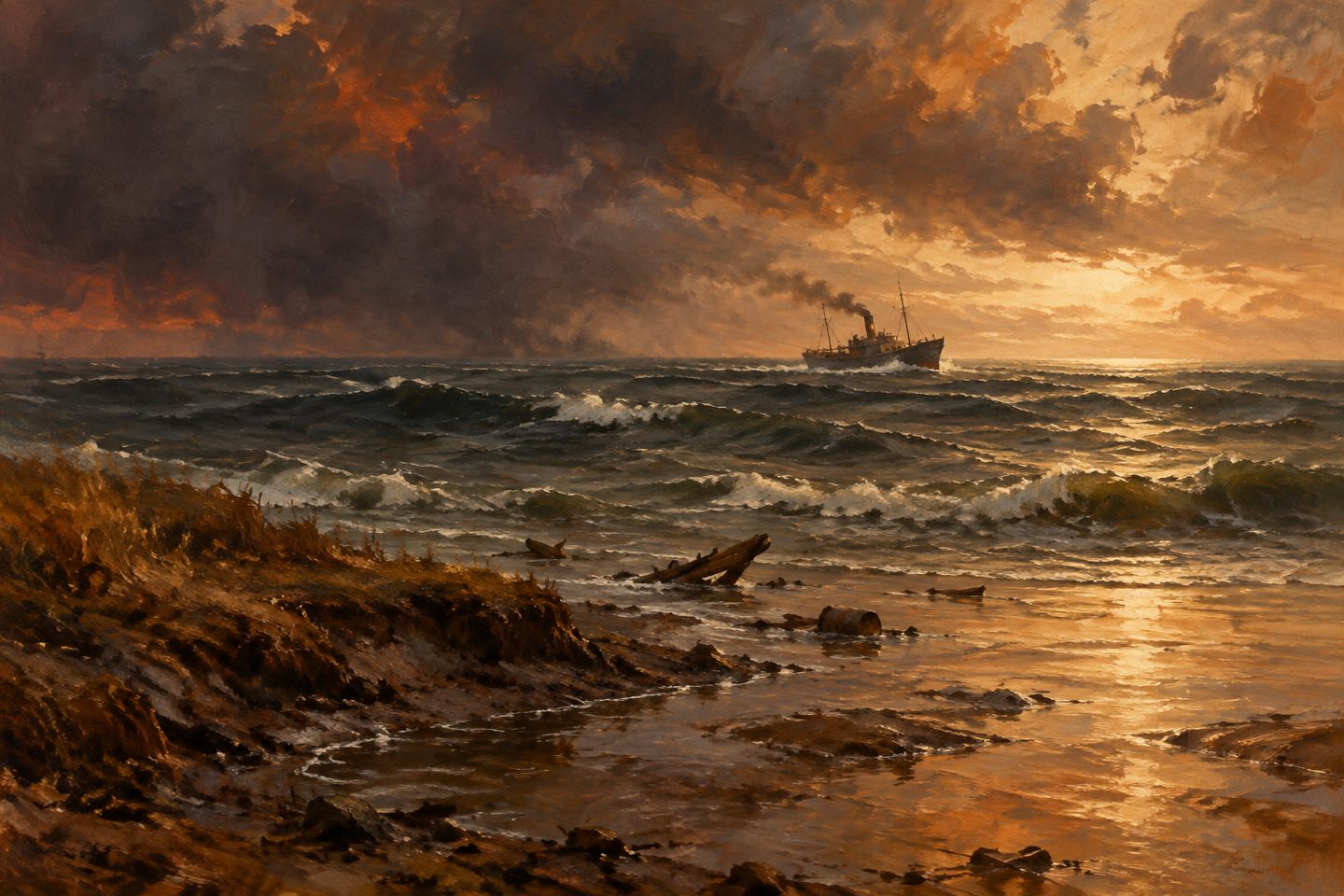
Alfred Wallis: an Artists’ Artist opens at Pallant House Gallery on 21 November before travelling to Penlee House in Penzance in 2027. The exhibition brings together Wallis with Barbara Hepworth, Peter Lanyon, Margaret Mellis, Adrian Stokes, John Wells, Wilhelmina Barns-Graham, Ben and Winifred Nicholson, and Christopher Wood, alongside loans from private collections and museums including Tate, Kettle’s Yard and Aberdeen Art Gallery.
Wallis began painting around the age of 70, using household paint and cardboard after a working life at sea and in the rag-and-bone trade. His pictures of sloping houses, harbours, ships and rough seas under low grey skies were first exchanged as gifts or sold for a few shillings; what matters now is how they compress a scene into a few decisive shapes and lines without losing the weather, weight and strain of the coast.
Curator James Scott argues that the St Ives artists encountered Wallis just as they were searching for a new direction, experimenting with a restricted palette and flattened picture plane. The point of the exhibition is less to present Wallis as a precursor than to show a practical exchange of ideas: how artists look, borrow, simplify and test what a painting can hold.
One of the loans is a rare collaborative work, a Brittany quayside started by Christopher Wood and finished by Wallis. It gives the exhibition a close-up on technique and authorship, while also underlining Wallis’s independence: he kept painting in his own unmistakable manner until weeks before his death.
Source : The Art Newspaper