

Circus rings that shaped modern art
This autumn, two exhibitions in Paris and Wakefield trace how the circus fed the imagination of major modern artists. They show the ring as a place where movement, light and performance became tools for painting and drawing.
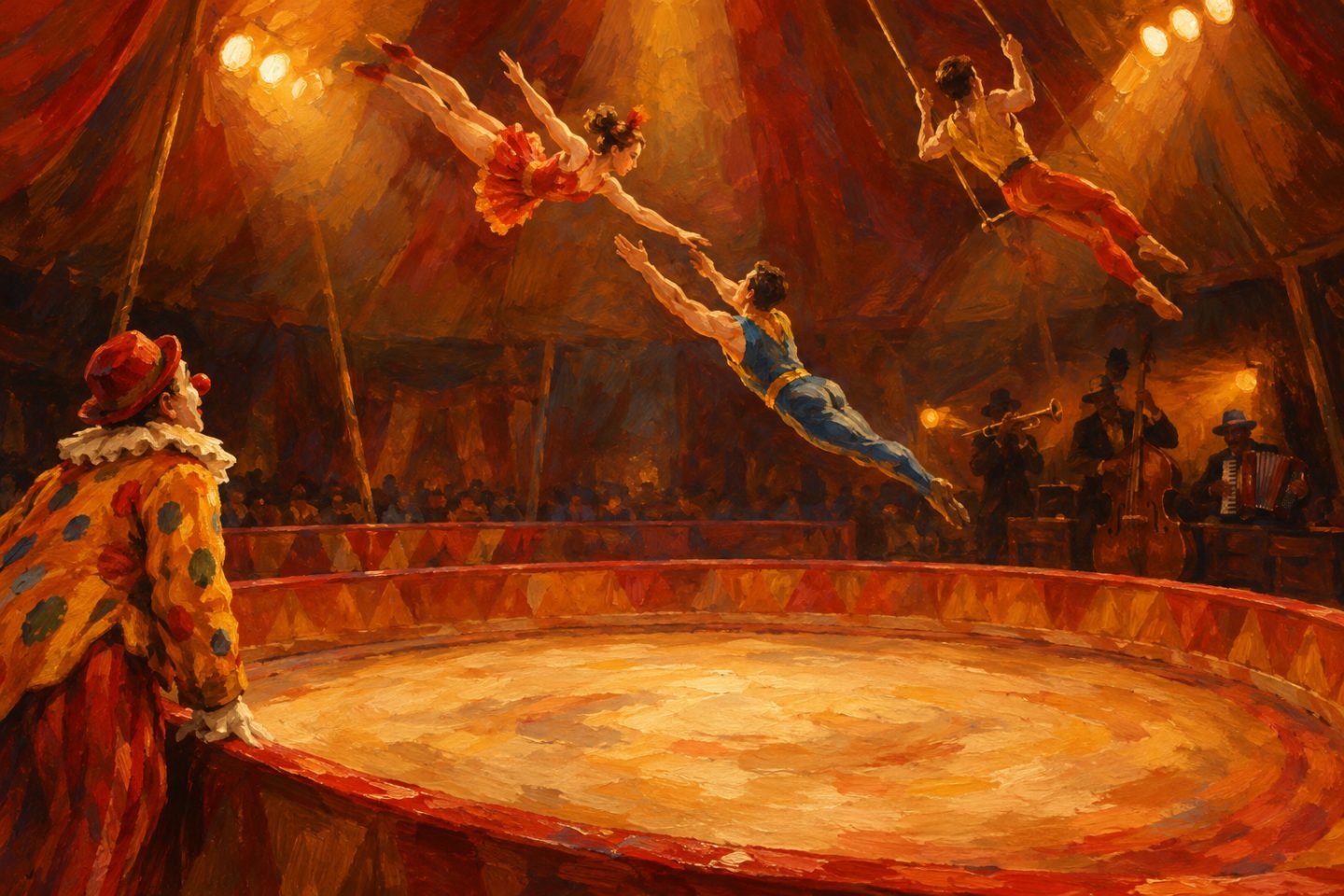
At the Musée de Montmartre, The Circus: a Factory of Modern Art opens on 16 October and brings together works linked to Toulouse-Lautrec, Chagall, Léger, Degas, Seurat, Bonnard, Rouault, Picasso and Renoir. Starting from the Cirque Medrano in Montmartre, once known as the “painters’ circus,” the show looks at the circus as a testing ground for colour, composition and speed.
What drew these artists was not just spectacle. The circular ring, the glare on costumes, the galloping horses and the comic timing of clowns pushed them towards images that feel more mobile, more fragmented and often more daring. Fernand Léger captured that shift in Cirque, calling on artists to leave behind rectangles for “a world of moving circles.”
A key loan in Paris is Léger’s Le Cirque Medrano (1918), arriving from the Centre Pompidou. Around it, props such as trumpets, musical saws and original clown costumes underline the circus as a world of objects, choreography and display—exactly the kind of material painters and printmakers can turn into visual language.
At the Hepworth Wakefield, Marc Chagall: The Circus opens on 21 November. The exhibition follows a subject Chagall returned to throughout his life, from childhood memories of fairs in Vitebsk to the gouaches he made at the Cirque d’Hiver in Paris between 1926 and 1927, which became the basis for the lithographs at the heart of the show.
For artists and drawing enthusiasts, the interest lies in how the circus trains the eye. Suspended bodies, precarious balances, repeated gestures and split-second turns all ask the artist to catch motion, tension and the fleeting nature of performance.
Source : The Art Newspaper