

At NYU Abu Dhabi, Baghdad’s modern legacy stays in motion
NYU Abu Dhabi Art Gallery is tracing the long afterlife of the Baghdad Modern Art Group, founded in 1951 by Jewad Selim and Shakir Hassan Al Said. On view through January 3, 2027, the exhibition brings together works from the group’s circle and from artists shaped by its ideas.
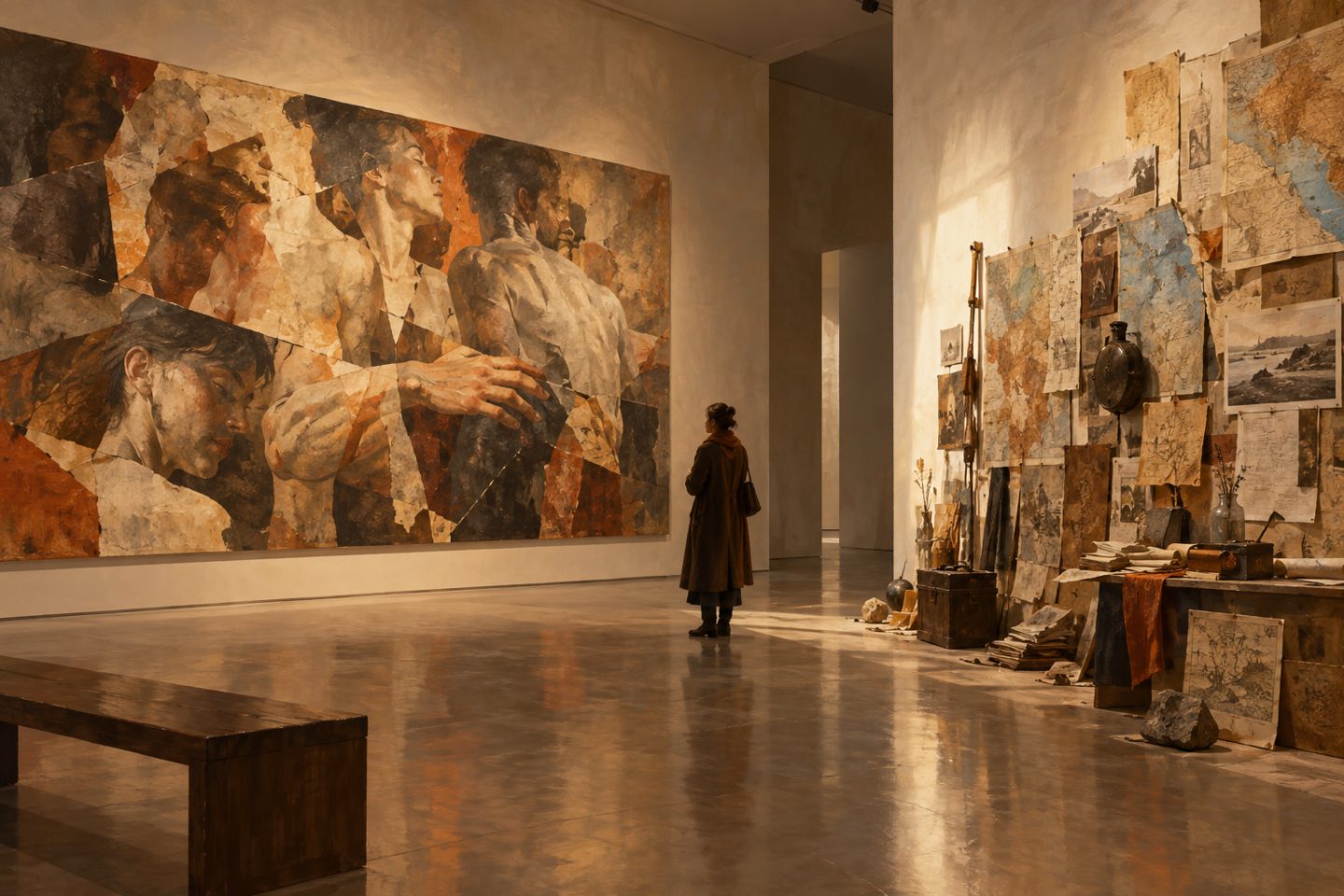
In All Manner of Experiments: Legacies of the Baghdad Modern Art Group, curated by Nada Shabout, looks back at a pivotal chapter in Iraqi art while treating it as a living history rather than a closed chapter. The show returns to a group that set out, from Baghdad, to build a modern visual language equal to its own time, at a moment when Iraqi artists were reconsidering inherited forms and the role of art in a changing society.
The exhibition gathers artists from the original circle and later generations influenced by it, including Faraj Abbo, Suad al-Attar, Dia al-Azzawi, Hanaa Malallah, Mahmoud Obaidi and Widad al-Orfali. Painting, ceramics and other media sit together here, making it possible to see how a shared set of questions can travel across decades without becoming a fixed style.
A history of looking, making and passing ideas on
For artists and anyone interested in drawing and painting, the exhibition is compelling because it brings the craft of thinking into view: composition, abstraction, visual memory and the making of a common language. Works such as Jewad Selim’s Good and Evil, An Abstraction appear alongside contemporary pieces that continue those inquiries, showing modernism not as an imported template but as a local field of experimentation.
The result is less a retrospective than a living archive. By linking Baghdad with the diaspora and with artists working today, the exhibition shows how an art movement is built through looking, revising and transmitting ideas over time. That continuity gives the show its value: it offers a clear view of how artistic methods survive, shift and remain active in the present.
Source : Hyperallergic