

Marie Tiburce introduces English calligraphy
L’Atelier Géant shares a beginner’s guide to English calligraphy with artist Marie Tiburce. It focuses on the tools, paper and hand control needed to approach this 17th-century cursive script.
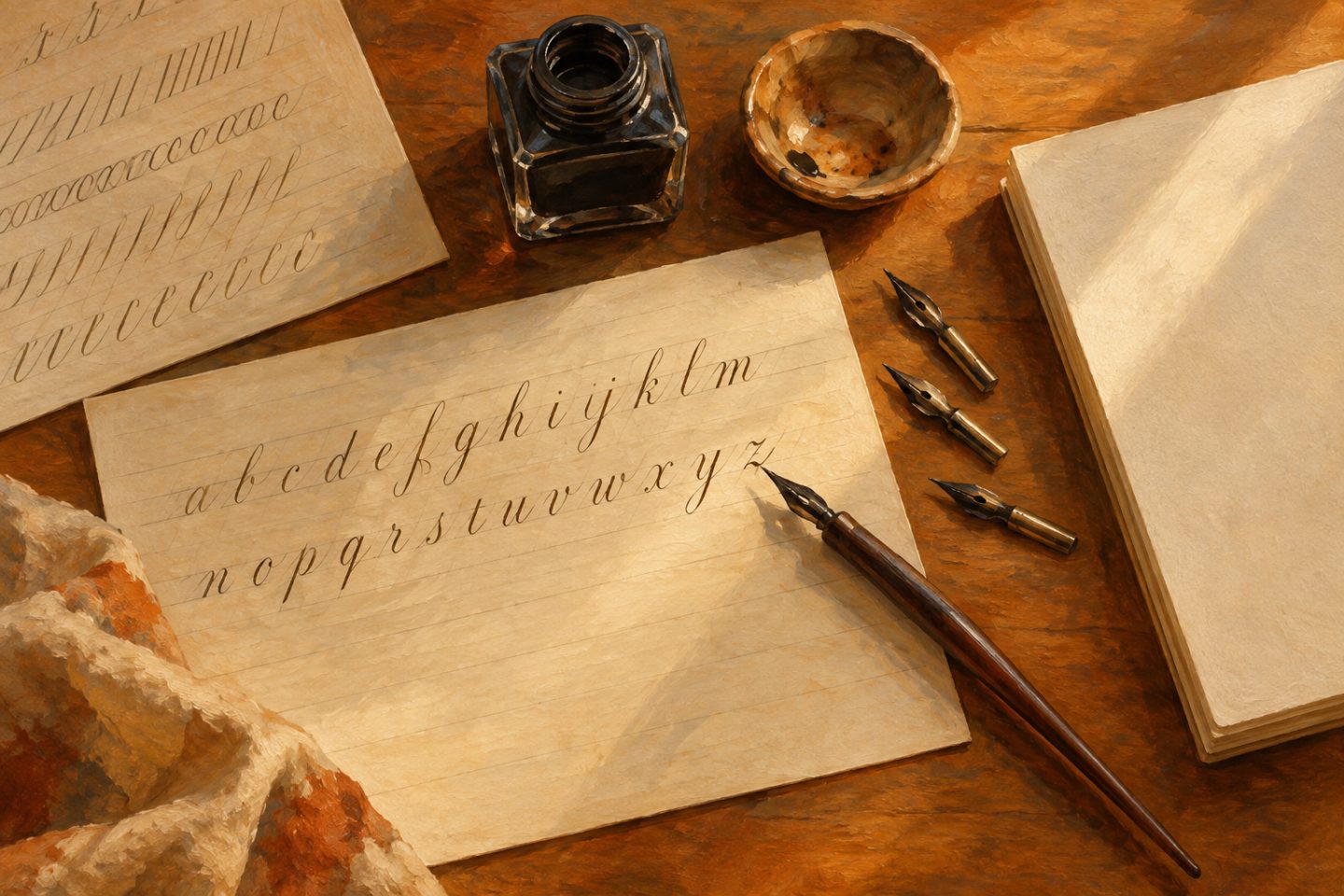
English calligraphy, also known as Copperplate, is defined by its steady slant, thin upstrokes and thicker downstrokes. To get started, Marie Tiburce works with Brause nibs, Jacques Herbin inks, a ruled practice pad and papers chosen for how they respond to the pen.
What makes this script compelling is the discipline behind it. The article highlights how pressure changes the width of each stroke, and how keeping the same angle helps letters, capitals and numbers stay visually consistent across the page.
For artists and drawing enthusiasts, the piece is a useful reminder that calligraphy is as much about looking as it is about writing. A softer or firmer nib, a smoother or more textured paper, or a more fluid ink will immediately change the line, the rhythm and the surface of the letterforms.
The guide also covers practical basics such as cleaning new nibs, loading ink and using a bottle or inkwell to control the flow. Marie Tiburce closes by pointing to two books that can support further practice and repetition.
Source : L’Atelier Géant